The Internet At A Crossroads

So here we are! How did we get here? And, … where are we going?

A little over thirty years ago, in 1993, the first browser for the World Wide Web made its appearance. The web browser made the Internet accessible for the first time to a larger audience. Before that, hardly anyone had heard of the Internet. It was new, it was exciting, and very few people thought about policy issues or policy consequences.

But today the Internet is everywhere, everyone is using it. It underlies our modern mobile network communications, where phone conversations run over the Internet. It underlies many business models where the Internet is considered essential. And more and more governments are using the Internet for their online services.  (more…)

Read more

Book Project

Looking forward to keep working and to finish my book project on the art and science of global public policy making.

I’ve been working on the book proposal for academic publishers for some time now and realize that I may need to revise my initial scope. Originally, it was designed as a book looking both at internaitonal relations and public diplomacy theory, and meshing that with practical experiences to highlight the lessons learned. (more…)

Read more

Privacy and the NSA – the International Covenant on Civil and Political Rights

This analysis was written in January 2014, shortly after the first Snowden revelations. Annotations referencing new developments are at the bottom. Some reference links have since gone dark, but I prefer to keep the original links as a public record. Please see the May 2026 postscript update below the article.


On a mailing list which I am following, someone suggested in relation to privacy and the NSA:

“There is probably already an international treaty or resolution at https://www.treaties.un.org dealing with privacy of communications. But, the NSA probably does not pay much attention, if they are even aware of these statements at all. NSA will, however, pay attention to the US Executive, US Courts and/or US Congress because these agencies have real power over it.”

Somehow the suggestion to check on an international privacy treaty seemed like an interesting challenge to me. It has been a very interesting exercise, even though I need to add the caveat that I am not a member of the legal profession, but only an interested lay person. (more…)

Read more

NSA surveillance hurts U.S. businesses

For many years I have been a strong believer in the benefits of the technology powering our modern information society. I have advocated that the eco-system arising from the merger of computers and communications will ultimately help people in their socio-economic development. I have been a staunch supporter of triple-play (merger of IT, telecom and TV) and quadruple-play (IT, telco, TV and mobile) technologies, thinking that the more we can share information, the better it will be for us individually and for our society overall.

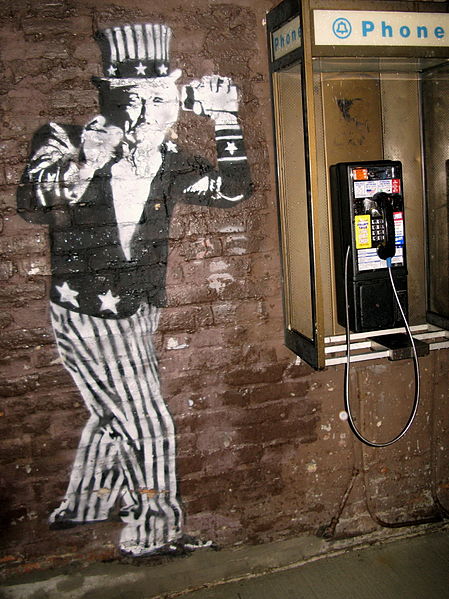
Uncle Sam Listens In
Original image by Jeff Schuler. Licensed under the Creative Commons Attribution 2.0 Generic license.

Surveillance changes everything

However, the revelations triggered by Edward Snowden over the past eight weeks about widespread snooping in on the electronic information we leave behind in this information-rich environment, the news about widespread spying by our own government agencies, and by those of friendly and not-so-friendly governments have made me re-examine my own assumptions and attitudes towards sharing my details with various commercial Internet services.

Turning away from U.S. products and services

Whereas before, I have not had a problem maintaining phone numbers, email addresses or my Skype name on Facebook, today I deleted those. Whereas before, I had no problem keeping my résumé and other personal files in my Google Drive, today, I deleted all files from the service. Whereas I am glad that Microsoft is offering me SkyDrive, today I have decided that I will refrain from using the service.

Next will be Apple’s iCloud, where my iPhone syncs a lot of personal things from me. From now on, I am working with a cloud service under my control. I stopped using Google Chrome today over concerns that I may be tracked more than I would like to be, and switched back to Mozilla’s Firefox browser, which is giving me more control over my privacy settings. As of this week, I am no longer using Microsoft Outlook and have changed to Mozilla’s Thunderbird, although Outlook has provided me with a very good user experience over the past decade or more. My Outlook Calendar is no longer, and the other calendar(s) which I used to sync with Yahoo and Gmail and iCloud is now going to be synced only with my cloud, using open source software under a free license.

Surveillance hurts business interests

This is what surveillance does to U.S. businesses. Customers like me will turn away from proprietary software, from commercial vendors, and increasingly will turn to free and open software. And if even I, who for over twenty years have been a strong supporter of all these technologies, if even I am starting to turn away from U.S. based providers, then it is clear that many others will do the same. And this will hurt U.S. business interests. And if U.S. businesses lose money, then also the U.S. as a whole will be hurt. I really feel sorry for the mostly U.S. based businesses, where many of my professional friends and colleagues work. I trust most people in these businesses are good people. I also trust that most of these businesses don’t want to share my personal data with anyone. However, the current situation with secret laws, secret courts, widespread data collection by U.S. intelligence agencies operating “lawfully” forces me to turn away from U.S.-based services. I have regrettably lost trust in “the system”.

Re-evaluating assumptions and attitudes towards data privacy

It is really ironic that someone like me, who has been an outspoken advocate for all the good things this information society and information technology revolution is bringing us, is going through this exercise. But maybe it will turn out to be a healthy exercise. With whom do I want to share this or that information about myself? In the past, I have of course thoroughly examined, evaluated and adjusted my privacy settings in Facebook, Twitter, LinkedIn, Google+ and other such online services. But in other respects, I have been more trusting that the companies offering email services like Yahoo or Gmail, or cloud services like Microsoft Skydrive, Google Drive, Apple’s iCloud, etc will keep my personal data private to myself. However, what we all have had to learn in the past few weeks results in a loss of our trust in the ability (and perhaps the willingness) of those companies to protect our privacy when ordered by law enforcement authorities.

Nothing to hide – nothing to worry?

NSA headquarters
The NSA headquarters in Fort Meade, Maryland. Photograph: EPA

Well, there is the argument that “those who have nothing to hide” will have nothing to worry about. This is the argument that I have trusted in the past, that the law enforcement and spy agencies will only go after criminals and terrorists. That they will do so only after having obtained a warrant from a judge, that there will be sufficient judicial and parliamentary oversight over the process, ensuring my civil rights. But what has transpired over the past weeks is that this argument is thoroughly wrong-footed. Because these information-hungry agencies are conducting a sweeping vacuuming of all available data, regardless of reasonable suspicions about people, regardless of whether the data belongs to domestic or foreign individuals. So, the “nothing to hide” argument is wrong, because it is not targeted individuals whose data is being vacuumed into the great data abyss of those intelligence agencies, but the data of all of us, regardless of any suspicion.

NSA spying on 4chan

Everyone has something to hide – it’s a central aspect of the right to privacy

And just like most people, of course do I have something to hide. Nothing that would be criminally suspect, of course, but my bank account is and ought to be private, just like my medical records, my phone records, my religious affiliation, the friends I speak with, the letters I receive, the pictures I take of my son, or the books I buy on Amazon. We have a constitution that demands our government to respect our civil rights, yet I get the distinct feeling that these constitutional rights are now under threat precisely by those who claim to be working for us, to guarantee for our security. Thus, somehow, I feel less secure now, less secure because I fear for my freedoms, I’m afraid that someone is taking away my civil rights.


Vote for change – talk to your representative

Briefwahl
© dpa

I want to live in a free society, where we can speak out freely what we think, without the fear that whatever we say anywhere anytime can be used against us. That’s why I’m not going to give up and hide. We have elections, and our politicians need to listen. We need more oversight, a stop to suspicion-less data collection, and a lot more transparency and accountability of the surveillance agencies worldwide. I don’t have a vote in the U.S. elections, so I hope my many American friends will do the right thing and call their Congressman, their Senator. I hope they will make sure their voices are heard. I have to trust my ability to engage with lawmakers in my country to protect my constitutional rights, my civil rights, my human rights. Our next election is less than two months ahead.

Read more

European Parliament against fundamental changes to the #ITRs – 22 November 2012 – (WCIT-2012)

See on Scoop.itInformation Society

The European Parliament adopted a resolution on 22 Nov 2012 calling upon the European Council and the Commission to ensure

that any changes to the International Telecommunication Regulations help to advance “the internet as a truly public place, where human rights and fundamental freedoms, particularly freedom of expression and assembly, are respected and the observance of free market principles, net neutrality and entrepreneurship are ensured.”


The EP regrets “the lack of transparency and inclusiveness surrounding the negotiations for WCIT-12”, rejects that ITU or any other single entity should have a regulatory authority over Internet governance or traffic flows, and “believes that internet governance and related regulatory issues should continue to be defined at a comprehensive and multi-stakeholder level.”


Make sure you read the full text of the resolution.


See on www.europarl.europa.eu

Read more

Barack Obama on Internet Freedom – Reddit AMA on Wed, Aug 29, 2012

U.S. President Barack Obama broke all well-trodden paths and presidential campaign rules Wednesday afternoon, when he became the first candidate of either party to do an AMA (“ask me anything”) on Reddit. The appearance was a complete surprise, even for veteran Redditors.


One of the ten questions answered (out of over a hundred questions asked) was about his position on Internet Freedom:

Question:

We know how Republicans feel about protecting Internet Freedom. Is Internet Freedom an issue you’d push to add to the Democratic Party’s 2012 platform?

Answer:

Internet freedom is something I know you all care passionately about; I do too. We will fight hard to make sure that the internet remains the open forum for everybody – from those who are expressing an idea to those to want to start a business. And although there will be occasional disagreements on the details of various legislative proposals, I won’t stray from that principle – and it will be reflected in the platform.

via I am Barack Obama, President of the United States — AMA : IAmA.

Read more

Iran threatens to disconnect from the Internet

Iran to switch to a Intranet, dubbed the “Halal Internet”. Can a nation simply flip a switch and disconnect itself from the web? Some commentaries suggest that this is not feasible, that a lot of content would need to be re-created in Iran. However, is it not much the same like a corporate Intranet, allowing some traffic through while disallowing some other? What do you think?

via Iran threatens to disconnect from the Internet – Outside the Box – MarketWatch.

Read more